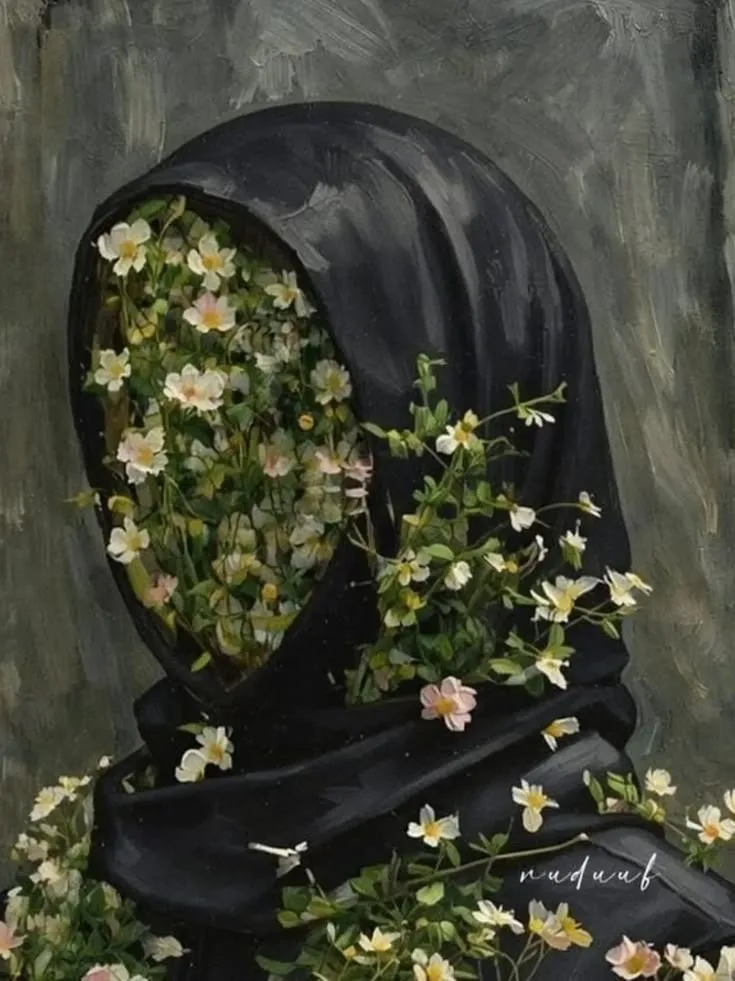
 Under the Haik
Religion Without Spirituality—or Spirituality Without Responsibility?

We often hear the same distinction: religion is institutional, political and concerned with rules, while spirituality is personal, sincere and free.
It sounds profound. It is also far too convenient.
Yes, religion can exist without genuine spirituality. A person may pray to be seen, quote scripture without mercy, or obsess over what is lawful while neglecting the condition of their own heart. Religious institutions can become entangled with power, and sacred language can be manipulated for political purposes. Islam itself does not deny any of this. The Qur’an condemns hypocrisy, empty ritual and those who preach righteousness while failing to practise it.
But acknowledging corrupted religion does not prove that religion itself is the corruption.
Spirituality is not automatically virtuous
People often use the word spirituality as if it naturally means sincerity, wisdom and moral goodness. Yet spirituality can also become self-centred, irrational and completely detached from responsibility.
If spirituality has no revelation, no discipline and no authority beyond personal feeling, what prevents it from becoming:
“I believe whatever comforts me, reject whatever challenges me, and call the result enlightenment”?
A spirituality that never tells us “no” is not necessarily guiding us. It may simply be reflecting our own desires back at us.
Almost everyone appreciates compassion, inner peace, forgiveness and divine love. The real test begins when faith demands something inconvenient: controlling our anger, restraining our desires, giving away wealth, remaining honest when lying would benefit us, praying when we are tired, or accepting that we are not the final judges of good and evil.
Spirituality without responsibility can easily become a religion of the self.
Islam never separated the heart from the law
The opposition between spirituality and religious law is particularly misleading when applied to Islam.
Islam does not ask us to choose between the heart and the body, or between inner faith and outward practice. It joins them together.
Prayer is a physical act, but it is meant to cultivate humility and remembrance. Fasting is a legal obligation, but its purpose is taqwa: consciousness of Allah. Zakat is calculated through rules, yet it purifies wealth and confronts selfishness. Hijab has an outward form, but it is also connected to modesty, obedience and one’s relationship with Allah.
The outward act without sincerity can become hollow. But sincerity without action can become an excuse.
The Prophet ﷺ did not teach spirituality as a collection of private emotions. He taught worship, character, justice, family responsibilities, financial ethics and social obligations. The famous concept of ihsan—worshipping Allah as though you see Him—was not presented as an alternative to Islam and iman. It was their highest expression.
Islamic spirituality does not abolish discipline. It gives discipline a soul.
Fiqh is not the enemy of spirituality
Classical fiqh is often dismissed as institutionalised religion created mainly to control people. Certainly, jurists were human beings. They disagreed, lived within particular societies and could make mistakes. Political powers sometimes promoted certain interpretations, and scholars were not always independent from their environments.
But reducing centuries of Islamic jurisprudence to political control is historically lazy.
Fiqh was also developed to answer real questions: How should contracts be conducted? What constitutes exploitation? What are the rights of spouses? How is inheritance divided? What happens when someone is harmed? How should worship be performed? How do we distinguish obligation from recommendation and prohibition from mere dislike?
These questions cannot be answered by vague spiritual feelings.
Without a legal and interpretive tradition, religious practice would depend on the preferences of whoever happens to be speaking most loudly. Fiqh does not eliminate disagreement; it gives disagreement a method. It asks for evidence, definitions, principles and intellectual consistency.
One may criticise a ruling or challenge an interpretation. But replacing scholarship with personal intuition does not automatically produce liberation. It may simply replace the authority of scholars with the authority of the ego.
Political misuse does not invalidate religious truth
It is also fashionable to explain Islamic doctrines entirely through geopolitics: colonial alliances, ruling families, empires and struggles for influence. These histories deserve serious investigation. Political powers undoubtedly helped certain movements spread while marginalising others.
But the political success of an interpretation does not, by itself, prove that every belief associated with it was invented by politics.
A doctrine must still be evaluated through its sources, arguments and historical development. Otherwise, history becomes a shortcut: instead of answering an Islamic argument, one merely attaches a political label to it.
This method is used selectively. When a traditional position becomes influential, its influence is treated as evidence of manipulation. When a progressive interpretation gains support through universities, governments, media platforms or Western institutions, that institutional power is rarely treated with the same suspicion.
If political support can compromise religious conservatism, it can also compromise religious reform. Intellectual honesty requires us to scrutinise both.
Every spiritual vision contains a politics
Calling religion “political” does not end the discussion. Every moral worldview eventually influences society.
Ideas about freedom, sexuality, family, clothing, education and authority are never entirely private. Even the person who says religion should remain inside the home is making a political claim about where religion is permitted to exist.
Secularism is not the absence of a worldview. It has its own assumptions about human nature, freedom, public life and legitimate authority. When the state decides which expressions of religion are acceptable, it is not creating neutrality. It is exercising power.
A Muslim woman who covers because she believes Allah commanded it is frequently told that her decision cannot be merely spiritual: it must be political, cultural or imposed. Yet when another woman uncovers in the name of autonomy, her decision is accepted as personal and self-evident.
Why is obedience to desire considered individual freedom, while obedience to God is automatically treated as submission to men or institutions?
That double standard reveals that the debate is not really about protecting personal choice. It is often about deciding which choices modern society is willing to respect.
Religion requires humility
Religion makes a difficult claim: truth does not begin and end with us.
That is precisely why it can be uncomfortable. It asks us to submit our preferences to something higher than our feelings. It teaches that our sincerity matters, but sincerity alone cannot transform every action into truth.
A person can be sincerely mistaken. A person can feel spiritually fulfilled while behaving unjustly. History contains many people who believed deeply in their own moral purity while harming others.
Revelation, scholarship and religious discipline provide standards outside the self. Those standards must be studied carefully and applied with wisdom, but their purpose is partly to prevent us from turning every desire into a principle.
Submission to Allah is not intellectual passivity. Islam repeatedly calls human beings to observe, question and reflect. But reflection is not the same as assuming that divine truth must always agree with the values currently fashionable around us.
We need both spirit and structure
The real choice is not between cold religion and enlightened spirituality.
The choice is between an integrated faith—where belief, worship, ethics and responsibility correct one another—and a fragmented spirituality in which individuals keep whatever inspires them and discard whatever demands sacrifice.
Religion without spirituality can become performance.
Spirituality without knowledge can become superstition.
Spirituality without discipline can become self-indulgence.
And spirituality without responsibility can become nothing more than the ego speaking in sacred language.
Islam offers neither empty legalism nor uncontrolled mysticism. It calls for a living heart guided by revelation, and outward actions animated by sincere intention. When Muslims fail to embody that balance, the answer is not to separate spirituality from religion. It is to restore spirituality to religious practice and responsibility to spiritual claims.
The question, therefore, is not merely whether religion can exist without spirituality. Clearly, it can—and when it does, it becomes hollow.
The more uncomfortable question is this:
Can spirituality remain meaningful when it recognises no truth above personal experience, accepts no obligation that contradicts desire, and answers to no authority beyond the self?